10 Things Every Property Manager Should Automate in 2026
From rent reminders to owner reports: ten recurring tasks that drain your team's time every day, and how a property-management system can automate them.
 Written by Marouane Ourahou · August 10, 2026 · 5 min read
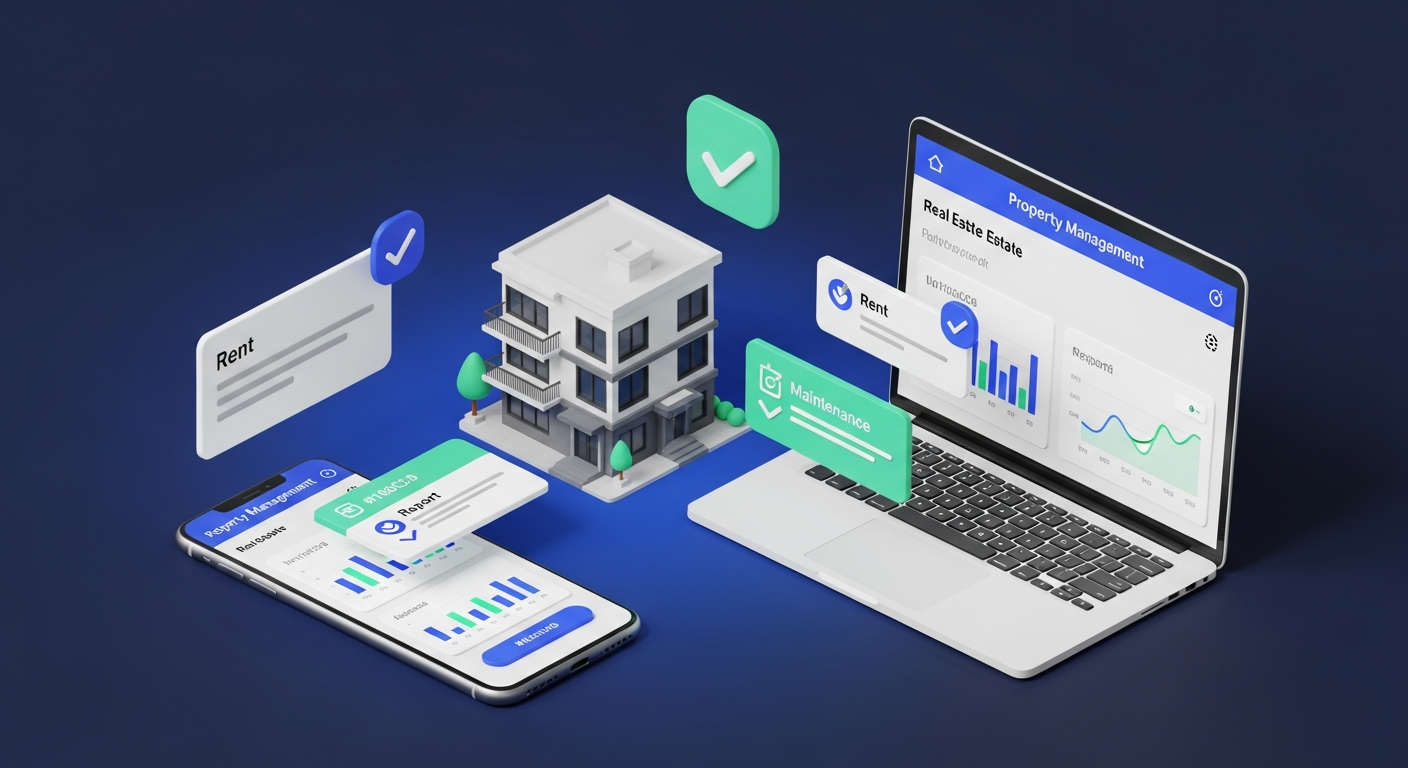
Is your team managing properties, or chasing tasks?
Picture this morning: it’s nine o’clock, one tenant hasn’t paid yet, another is asking about an old receipt, a maintenance request is pending, an owner is waiting for their monthly report, three contracts are nearing their end, and the accountant needs the settlements. Not one of these tasks is hard on its own, but the problem is their repetition: this daily whirlwind turns a property manager from a proactive leader into a reactive clerk.
The principle behind this article is simple: every recurring task that doesn’t require a human decision is a natural candidate for automation. And the numbers back it up — McKinsey’s 2025 operations report found that companies automating 40% of their back-office tasks achieve profit margins 22% higher.
What gets automated, and what stays with the manager?
Suited to automation are tasks that are repetitive, rule-based, time-consuming, prone to manual error, and triggered by predictable events from data already in the system. What stays with the manager is negotiation, managing sensitive relationships, exceptional cases, and strategic decisions. Automation removes the repetitive work, not the manager’s judgment — it makes them more organized, more professional, and quicker to respond.
1. Reminding tenants of rent due dates
The manual way: WhatsApp messages and calls repeated every month, for every tenant, with the same wording.
What gets automated: automatic reminders before the due date, on the day, and after — each carrying the payment link.
The result: no one on your team has to remember who to remind; the system handles it and stops automatically once payment is made.
2. Creating invoices and scheduling due dates
The manual way: entering invoices monthly for every unit, with all the copy errors and forgetfulness that come with it.
What gets automated: issuing invoices automatically from the contract data, on a schedule covering the entire lease term.
The result: zero repetitive entry, and full consistency across the collection cycle.
3. Tracking overdue rent
The manual way: reviewing scattered records to spot who is late, so the follow-up itself is late.
What gets automated: detecting lateness the moment it happens, and escalating reminders automatically.
The result: proactive follow-up instead of waiting for arrears to pile up, since tying collection to reminders and digital payment helps you track what’s due at the right time.
4. Matching payments and settlements
The manual way: comparing the bank statement to rent records and Excel sheets, line by line.
What gets automated: linking every incoming payment to its invoice, contract, and owner automatically.
The result: instant financial clarity, and settlements with no copy errors.
5. Following up on lease renewals
The manual way: relying on memory or the calendar, so contracts lapse with no renewal and no notice.
What gets automated: alerts before each contract ends, at intervals you choose.
The result: early negotiation with the tenant, and fewer vacancy periods.
6. Receiving and tracking maintenance requests
The manual way: reports scattered across calls and messages, some lost before they are even logged.
What gets automated: submitting requests from the tenant portal with a description and photos, and tracking their status until closed.
The result: faster response and higher satisfaction, because automating maintenance workflows helps teams track and organize requests from the moment they’re submitted until they’re closed.
7. Answering repetitive inquiries
The manual way: “Where’s my receipt?” and “How much do I still owe?” — questions that consume hours of searching through records.
What gets automated: a tenant portal where they find their invoices, receipts, and request status themselves.
The result: less pressure on the team, and self-service available around the clock.
8. Preparing periodic owner reports
The manual way: gathering data from multiple sources and formatting it manually every month for every owner.
What gets automated: performance reports generated from the operating data itself, ready on time.
The result: higher trust from owners and less time spent preparing, because automated reports deliver the information clearly and ready whenever it’s needed.
9. Recording expenses and tracking property performance
The manual way: expenses recorded in separate files that never meet the revenue.
What gets automated: linking every expense to its property, unit, and category, and calculating net profit automatically.
The result: knowing each property’s true profitability, not just what was collected.
10. Assigning tasks and tracking team performance
The manual way: tasks assigned verbally or in group chats, with no clear owner and no follow-up.
What gets automated: assigning tasks and tracking their status from a single board everyone sees.
The result: clear responsibilities, and measurable performance no matter how large the team grows.
The summary table: the ten tasks at a glance
| Task | The manual way | What gets automated | The result |
|---|---|---|---|
| Rent reminders | WhatsApp and calls | Scheduled reminders with a payment link | Less follow-up |
| Creating invoices | Monthly entry | Automatic issuance from the contract | Fewer errors |
| Overdue rent | Manual review | Automatic detection and escalation | Faster action |
| Matching and settlements | Bank statement and Excel | Linking the payment to its invoice | Financial accuracy |
| Contract renewals | Memory and calendar | Alerts before expiry | Less vacancy |
| Maintenance requests | Scattered calls | Portal and status tracking | Faster response |
| Tenant inquiries | Searching records | Self-service via the portal | Less pressure |
| Owner reports | Manual compilation | Automatic reports | Higher trust |
| Expenses | Separate files | Linked to property and category | Clear profitability |
| Team tasks | Verbal assignment | Unified task board | Clear accountability |
Conclusion: automation is a management decision before it is a technical one
The ten tasks above share one thing: many of their steps can be organized and automated within a single system, instead of being split across separate tools and processes. In Ajar, contracts, invoices, collection, and reports are connected within one system, so information moves between processes without being re-entered each time. The goal isn’t for your team to work more, but to spend less time on repetitive work and more time managing the portfolio.